The PIM for apparel and accessories
Ensure your products are always on trend with a centralized source of market-ready product information that delivers:
■ Eye-catching product experiences on every customer touchpoint
■ Faster time-to-market to meet seasonal trends and demands
■ Fewer costly chargebacks thanks to complete product data oversight

Trusted by leading apparel brands:






Sell on more channels in more markets
Use AI-powered content creation and API-based syndication to sell effectively in more places.
Accelerate your time-to-market
Stay ahead of seasonal trends with composable architecture that makes your supply chain agile.
Deliver consistent shopping experiences
Create standout and standardized product experiences with a single source of complete data.
Simplify shipment compliance
Avoid costly retail chargebacks with SKU-level data transparency for every retailer and market.
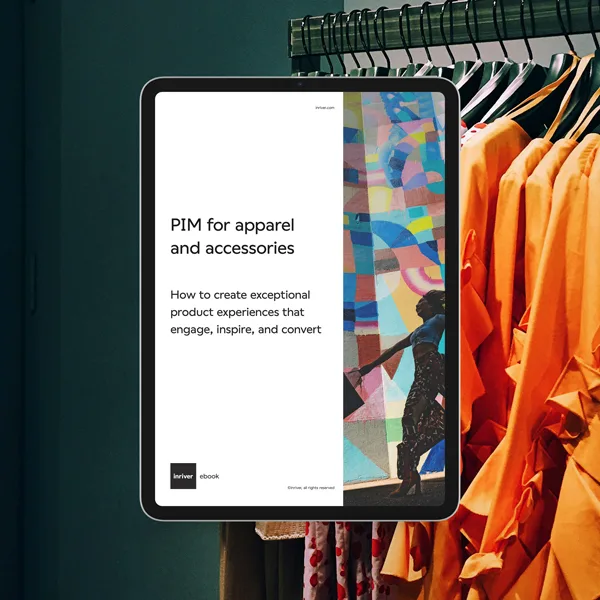
The Inriver guide explains why PIM software is every season’s must-have for apparel brands.
Get it now >

New Balance’s PIM journey: From implementation to optimization
See how New Balance’s PIM journey has evolved to support new use cases and innovations.
Explore more Inriver success stories.
The latest from Inriver on apparel and accessories:
Want to see the Inriver PIM in action?
Schedule a personalized, guided demo with an Inriver expert today to see how the Inriver PIM can get more value from your product information.
Frequently asked questions
How can a PIM solution benefit fashion retailers managing large product catalogs?
A PIM for fashion is essential for fashion retailers managing extensive product catalogs. It centralizes and standardizes all product content, ensuring consistency across multiple channels. With this PIM system, retailers can streamline product updates, maintain data accuracy, and quickly adapt to changing trends. This helps improve customer experiences, increase conversions, and reduce costly returns due to inconsistent information.
Can PIM software integrate with existing tools used by fashion brands?
Yes, modern PIM software is designed to support various integrations with the systems that fashion retailers already use. Whether it’s your eCommerce platform, ERP, or digital asset management system, a robust PIM tool seamlessly connects with your existing ecosystem. This allows for real-time synchronization of product information management across all channels, keeping everything up-to-date and easily manageable.
How does a PIM system enhance product experiences in the fashion industry?
In the fashion industry, delivering compelling product experiences is key. A PIM system enables brands to create rich, consistent, and visually appealing product listings across all customer touchpoints. By ensuring your product content is always accurate and complete, a PIM solution helps fashion brands stay competitive, improve customer loyalty, and accelerate time-to-market with timely product launches.
How does a PIM platform help fashion brands manage complex product variations?
A fashion PIM simplifies catalog management for fashion brands by centralizing all product variations, such as size, color, and fabric, in one place. This ensures that product data is accurately reflected across all channels and reduces the manual effort required to maintain multiple product listings. By streamlining product updates and ensuring consistency, a PIM platform enhances the customer experience by providing accurate and up-to-date information, leading to fewer returns and higher customer satisfaction.
What is the typical timeline for PIM implementation in the fashion industry?
The timeline for PIM implementation in the fashion industry varies based on the complexity of the product data and the systems in use. However, for most fashion brands, the process can take anywhere from a few weeks to several months. During this time, the PIM platform will be integrated with existing commerce platforms, and product data will be centralized and standardized for efficient catalog management. A successful implementation results in quicker time-to-market, improved customer experience, and more streamlined operations.