Advantages of online marketplaces: Why they’re the new favorite retailer
February 2, 2026Online marketplaces are one-stop digital shopping destinations. But what do you know about winning in these competitive marketplaces?
The online marketplace has become an indispensable component of e-commerce, transforming how businesses and consumers interact. Marketplaces have become the favored platform for both consumers and vendors, offering convenience, embracing the digital world, and global access.
But what exactly are online marketplaces? How do they impact customer buying behaviors? And how can brands selling online make the most of these digital shop windows? Let’s take a closer look at how online marketplaces are reshaping the future of e-commerce.
Success on online marketplaces requires more than just listing products. Brands need robust PIM for e-commerce infrastructure to manage product data across multiple platforms, ensuring consistency, accuracy, and compliance with marketplace requirements.
Additionally, forward-thinking sellers are leveraging AI for e-commerce to automate content creation, optimize pricing strategies, and personalize product recommendations, giving them a competitive edge in a crowded marketplace.
What are online marketplaces?
An online marketplace is a digital hub where numerous sellers place their goods and services. Unlike isolated e-commerce shops, marketplaces aggregate offerings, enabling the end consumer to enjoy a one-stop shop as they would in a real-life marketplace. Three key offerings of online marketplaces include:
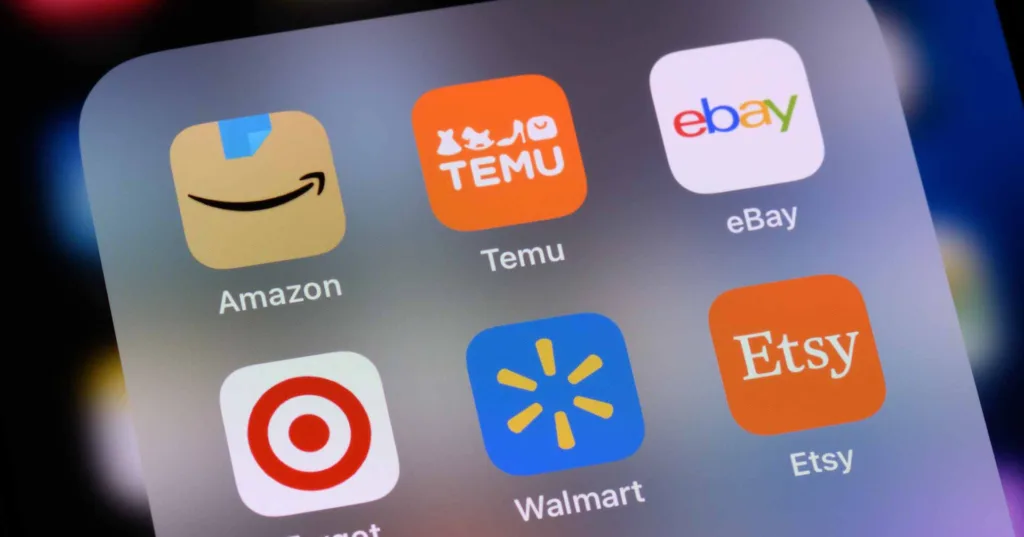
- A centralized shopping experience: Online marketplaces aggregate products from multiple vendors into a single platform, such as Amazon, eBay, and Alibaba, making shopping easy for customers by consolidating diverse offerings.
- Global accessibility: With the online marketplace, sellers can access a worldwide market that was previously impossible. According to BigCommerce, marketplaces account for 76% of all online purchases worldwide, highlighting their immense appeal to consumers. Small businesses can access such marketplaces without the hassle of logistical and financial burdens of international expansion.
- More trust and transparency: Online marketplaces gain the confidence of their consumers through secure payment systems, customer reviews, and a buyer protection policy. Platforms such as Etsy and Amazon allow for product authenticity and seller accountability.
Online marketplace vs e-commerce vs virtual store: What’s the difference?
If you’re selling products online, you must understand the differences between these types of digital channels. This will help you make informed decisions on your go-to-market digital shelf strategy.
Online marketplaces
A marketplace is where multiple sellers list their respective products, with examples including Amazon, eBay, and Wayfair. Multiple sellers are registered on the marketplace, with their products filtered by category for the consumer, creating a seamless buying experience. The sites are managed by third parties and drive high traffic volumes, creating fierce competition for the sellers.
E-commerce stores
An e-commerce store is a standalone website owned and managed by a single business. Examples include Shopify-based stores or branded websites like NewBalance or Carhartt. These platforms offer sellers complete control over branding, pricing, and customer data. However, they require significant marketing investment to attract traffic.
Virtual stores
Virtual stores are a subset of e-commerce but operate in virtual reality (VR) environments. A retailer can create a VR experience where customers can browse products like a physical store. While still emerging, virtual stores offer immersive shopping experiences but require advanced technology and infrastructure.
The key differences between online sales channels
To better understand the differences between marketplaces, e-commerce stores, and virtual stores, here’s a quick comparison. Each platform has unique advantages and challenges based on ownership, traffic potential, customer data access, setup costs, and the level of immersion it provides.
Understanding these differences can help you select the right platform based on your goals, resources, and target audience. The table below summarizes the key differences:
| Feature | Marketplace | E-commerce store | Virtual store |
|---|---|---|---|
| Ownership | Third-party | Individual business | Individual business |
| Traffic | High | Requires marketing | Niche and emerging |
| Customer Data Access | Limited | Full | Full |
| Setup Costs | Low to moderate | Moderate to high | High |
| Immersion | Moderate | Moderate | High |
Whatever combination of channels you opt to use, consider your product inventory management software choices carefully to ensure you provide a consistent product experience for your customers.
Managing product information across these different online marketplaces and sales channels demands centralized data management. PIM for ecommerce operations provides the single source of truth needed to maintain consistent product data, whether selling through Amazon, your own Shopify store, or emerging virtual reality platforms. This centralized approach ensures pricing, descriptions, and specifications remain accurate across every channel, reducing errors and improving customer trust.
How social media is influencing online marketplaces
Today, social commerce is reshaping the online marketplace experience, merging social interactions with commerce. Platforms like Facebook Marketplace, Instagram Shopping, TikTok, and Pinterest have brought online retail into the heart of consumers’ everyday lives. Here’s how social media platforms are transforming the online marketplace:
- Direct-to-consumer engagement: Social media marketplaces break the barriers between sellers and buyers through direct communication. Businesses can display products, interact with customers, and respond to real-time queries, offering a tailored shopping experience.
- Community-driven commerce: Facebook Marketplace thrives on localized, community-based commerce. Sellers can target certain demographics, fostering trust through proximity and social connections.
- Flawless integration of shopping features: Social media shopping tools have made shopping easier by directly integrating transactions. For example, on Instagram, one can shop directly from a post, a reel, or a story. This ease of use is driving the growth of social commerce, which is expected to reach $1.2 trillion in 2025 (Accenture).
- Utilizing data for user personalization: Social platforms excel at collecting user data. This data helps brands provide the best shopping experience through algorithms that evaluate user behavior and make recommendations accordingly, making the journey from discovery to final purchase easy and fascinating.
Online marketplaces: Benefits and challenges
While online marketplaces offer numerous advantages, they also have particular challenges that businesses must navigate.
Benefits of online marketplaces
The benefits of online marketplaces are undeniable, offering businesses a streamlined approach to reach vast audiences and enhance operations:
- Increased visibility: Marketplaces expose products to millions of potential customers. Amazon, for example, has over 300 million active users, which is the highest exposure any seller can get.
- Cost-effective setup: Unlike building an independent e-commerce store, joining a marketplace requires minimal upfront investment. Platforms handle website maintenance, payment processing, and security.
- Streamlined operations: Most marketplaces provide logistical support, such as shipping and returns. One of the best examples is Fulfillment by Amazon (FBA), which allows sellers to outsource inventory management and distribution responsibilities.
- Access to consumer insights: Sellers gain data analytics-driven insights into consumer behavior, which helps them improve pricing, inventory control, and marketing strategies.
Maximizing these benefits requires strategic use of technology. Modern AI for ecommerce platforms helps sellers optimize product titles and descriptions for marketplace search algorithms, automatically adjust pricing based on competitive data, and generate variant content at scale.
When combined with robust PIM for ecommerce foundations, AI capabilities enable sellers to operate efficiently across multiple online marketplaces while maintaining data quality and consistency.
Challenges of online marketplaces
With benefits also come challenges. From intense competition to strict requirements, these obstacles can affect sellers’ profitability and operations. Understanding these challenges is important to successfully navigating the online marketplace landscape.
- High competition: Easy access to sellers means they face heavy competition. They can expect heavy price wars and reduced profit margins.
- Strict requirements for sellers: Online marketplaces want their sites to stand out, which leads them to impose strict requirements on sellers. These requirements are typically around the product information sellers provide.
- High commission rates: Marketplaces charge commission rates for sellers, which can make a significant dent in revenue. For example, Amazon charges sellers up to 15% per transaction in certain categories.
- Limited customer relationship: Unlike standalone websites, marketplaces restrict direct access to customer data, making it harder to build long-term relationships.
Addressing these challenges starts with proper product data management. PIM for e-commerce sellers helps overcome strict marketplace requirements by ensuring product information meets platform-specific formatting rules, attribute requirements, and content standards.

Trends shaping global online marketplaces
The global marketplace ecosystem is growing exponentially with technological advancements and changing consumer behavior. Both emerging names and established brands are shaping the future of e-commerce.
As tools have become advanced and the expectations of consumers grow, global online marketplaces are evolving to provide seamless, innovative, and sustainable experiences. Some of the trends pushing the evolution of online marketplaces include:
- Emerging names challenging global leaders: The online marketplace space is dominated by Amazon, Alibaba, and eBay, among others, which offer a wide range of merchandise and easy shopping options. However, new solutions, such as MercadoLibre in Latin America and Flipkart in India, are quickly becoming popular in servicing regional markets.
- The role of technology: Technological innovation will be the foundation of the future global marketplace. AI (Artificial Intelligence), ML (Machine Learning), and automation are at the heart of innovation through personalized recommendations, dynamic pricing, and optimizing inventory. Discover comprehensive strategies for implementing AI for e-commerce success, including personalization engines, dynamic pricing tools, and automated content generation that help sellers compete more effectively on online marketplaces.
- Trends in cross-border commerce: Cross-border e-commerce is growing rapidly and is expected to reach $8 trillion by 2027 (Statista). Online marketplaces have become the bridge that assists cross borders, manages currency conversion shipping logistics, and adheres to local regulations.
- Sustainability initiatives: As consumers become more conscious of the environment, marketplaces are embracing sustainability. Etsy focuses on handmade, eco-friendly products, and Amazon invests in renewable energy and sustainable packaging.
Inriver: The PIM for a winning online marketplace strategy
Online marketplaces are a leading platform for digital commerce and offer substantial benefits for brands looking to accelerate digital growth. However, they also present various unique challenges, from meeting marketplace requirements to beating the huge amounts of competition on these third-party sites.
Success demands integrated technology solutions: PIM for e-commerce data management ensures product information meets every online marketplace’s specific requirements, while AI for e-commerce optimization automates content creation, pricing adjustments, and performance monitoring across platforms.
The Inriver platform offers the most flexible PIM software ready to accelerate your online marketplace strategy. Built on a fully adaptable data model and embedded with the latest AI technology, the Inriver PIM solution is the perfect engine for any omnichannel strategy.
Alongside the single source of truth for market-ready product information, the Inriver PIM has API-based syndication and digital shelf analytics technology built in, giving you all the tools you need to succeed in today’s omnichannel world from a single, intuitive platform.
Ready to see these new innovations in action?
Inriver offers the most comprehensive PIM solution on the market, built for speed, scale, and complexity. Let an Inriver expert explain how the Inriver PIM can turn your product data flows into a sustainable revenue stream.
- Get a personalized, guided demo of the Inriver platform
- Have all your PIM questions answered
- Free consultation, zero commitment
Thanks for reaching out!
We’ll be in touch soon.
Please try again in a moment.