PIM vs CMS
What’s the Difference? Which Do You Need? How Do They Work Together?
If you want to take your product content to the next level, which do you need: PIM or CMS software?
Understanding the differences between Product Information Management (PIM) and Content Management Systems (CMS) is essential for building an effective digital commerce strategy.

The exponential growth of digital commerce and connected experiences has thrust business strategies into overdrive. No longer can quality or quantity alone drive results on the digital shelf—businesses must now manage vast amounts of rich product content and product information in equal measure to engage and inform today’s customers.
To meet this challenge, two pivotal technologies emerge: Product Information Management (PIM) and Content Management Systems (CMS).
Understanding when to use PIM vs CMS—and how they complement each other—is critical for brands managing product catalogs across multiple channels. This blog unpacks PIM vs CMS systems and clarifies how they can work together to drive digital success.
It’s about more than content creation
Customers demand content. That much we know. The challenge lies in crafting content that is on-brand, engaging, and informative—all while organizing and distributing that content to the customers who want to see it and where they want to see it.
While CMS software equips you for content creation, it often leaves the rest up to you. In fact, “headless” CMS, which decouples back-end content storage (the body) from audience-facing presentation (the head), is increasingly common. These setups enable brands to publish content across digital touchpoints but also require a heavy technical overhaul.
Though not designed specifically for marketing content, today’s most advanced PIM systems provide the essential backbone for product data management, supercharging product data quality through accelerated onboarding, content enrichment, and flexible data models that tailor product attributes to specific channels or integrated systems.
All that said, in the question of PIM vs CMS, which one is right for you?
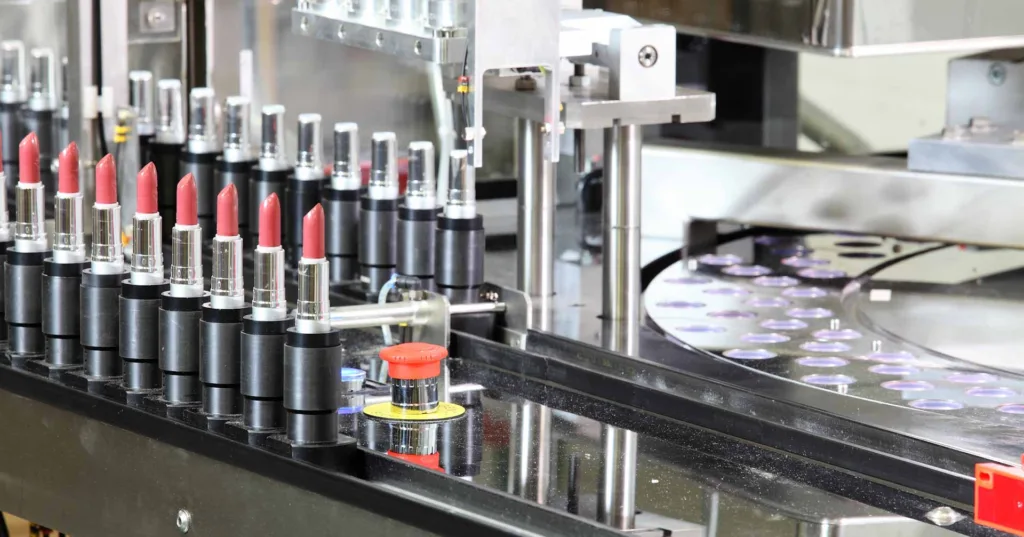
CMS or PIM?
If you’re trying to decide which of these solutions best meets your needs, start by understanding their core functions:
What is CMS?
CMS platforms provide powerful tools for creating, editing, managing, and publishing content across multiple digital touchpoints. While early CMS platforms focused heavily on web content, modern CMS solutions can manage any type of content, such as documents, videos, and even 3D models. With flexible content workflows, publishing capabilities, and the tools to create engaging digital experiences, CMS systems now play a central role in omnichannel strategies.
Common CMS examples include WordPress, Adobe Experience Manager, Contentful, and Sitecore. CMS platforms are essential for managing website content, blog posts, landing pages, and marketing campaigns.
What is PIM?
At its core, PIM software acts as the central hub for managing product data across internal systems. It consolidates product info from disparate channels into a single source of data truth. This gives brands the capabilities to manage vast product data portfolios, integrate with enterprise systems, and publish consistent and accurate product information across online stores, product catalogs, supply chains, and much more.
Leading PIM solutions like Inriver help businesses manage product catalogs, syndicate product data to marketplaces like Amazon and Walmart, and maintain consistency across all sales channels. PIM is especially critical for businesses with large product catalogs, complex product variants, or multi-channel distribution strategies.
What’s the difference between CMS and PIM?
While PIM and CMS share some similarities in controlling and streamlining the flow of information in a business, there are important differences:
- Data management focus: PIM primarily manages highly structured product data (product attributes, technical specifications, SKUs, pricing, inventory levels, and product relationships). CMS focuses on unstructured marketing content—digital assets like text, images, videos, and media files—that can quickly grow disorganized without proper content management.
- Functional capabilities: PIM software excels in product data governance and product information management, aggregating data from every step of the product lifecycle into a single, verified source of truth. CMS shines in facilitating content creation workflows, with a flair for content delivery and presentation across digital touchpoints
- Integration and scalability: PIM systems integrate with ERP, PLM, e-commerce platforms, and other enterprise systems to ensure product data consistency across all channels. A CMS platform often integrates with tools related to analytics, personalization engines, and marketing automation platforms. Depending on the platform, both PIM and CMS solutions can scale as needed to support business growth.
While CMS offers a single back-end platform for content creation and syndication, integrating with the front-end presentation layers often requires in-depth coding and developer experience—especially with headless CMS setups.
This is where the two software solutions intersect. Rather than thinking in terms of PIM vs CMS, it may be more beneficial for brands, manufacturers, and retailers to evaluate PIM and CMS solutions together.
In summary, the key difference is that PIM manages ‘what’ your products are (the data), while CMS manages ‘how’ you present them (the experience). Most successful digital commerce strategies require both systems working together.

PIM + CMS: how do they work together?
When combined, PIM and CMS offer complementary strengths that allow businesses to execute global digital strategies that deliver seamless, consistent omnichannel experiences.
Here’s a quick breakdown of how it works:
- PIM supplies validated, brand-compliant product data to CMS systems to empower content creators.
- CMS leverages this content-rich product data to develop engaging digital experiences across customer touchpoints.
Leading brands, manufacturers, and retailers leverage integrated PIM and CMS platforms to achieve consistent omnichannel commerce.
For example, Living Spaces, a home furniture and houseware retailer, started with only a CMS integration to achieve its e-commerce goals. But without the front-end infrastructure to support better customer experiences and order handling, it was clear that something more was needed. Only after implementing inriver were order processing and consumer-friendly operations made possible, boosting Living Space’s special orders by nearly 20%.
CMS and PIM: what’s the right solution for you?
If you’re evaluating PIM vs CMS, determining the ideal system depends entirely on your unique business needs, product catalog complexity, and omnichannel objectives.
For brands, manufacturers, and retailers lacking unified product data, implementing PIM may take priority to consolidate this foundation. On the other hand, enterprises struggling to keep pace with content demands may need to evaluate CMS first.
Often, integrating both PIM and CMS provides the most agile digital strategy to optimize information flows across systems, channels, regions, and more. The choice relies on carefully assessing your needs. But one thing is certain: by understanding the PIM and CMS landscape, you can better craft smart, scalable investments that will accelerate your digital success.
Inriver: The complete solution for a winning product content strategy
If you’re in the market for a more effective product content strategy, why not explore the benefits of the inriver PIM platform?
The inriver platform is the most comprehensive PIM software on the market, ready to integrate with all your internal systems, including CMS, ERP, MDM, and more.
Let an Inriver expert explain the many benefits of the enterprise-ready, fully adaptable Inriver platform.
Thanks for choosing Inriver! We’ll be in touch soon.
Please try again in a moment.