PIM AI integration: Unlock smarter, faster product data management
What does AI really deliver in PIM?
Cut through the noise and see how brands use AI to scale product data and results. Download the AI in PIM report.
Skip to:
- What is AI and PIM integration?
- What do different AI terms mean
- The importance of PIM AI integration
- What are the business benefits of PIM AI integration?
- How AI is reshaping product information management in 2025
- How AI and PIM work together to create seamless experiences
- What to look for in a PIM system for AI integration
In an omnichannel world, brands and manufacturers selling online already understand the significant value Product Information Management (PIM) software can add to their operations.
However, what if there were a way to extract even more value from a PIM system? This is what business leaders are doing through AI integration within their PIM platform. AI can bring significant gains for businesses using PIM, including competitive gains, fewer manual tasks, and more effective product experiences on every channel.
This article explores the benefits of integrating PIM with AI, the ways AI is transforming PIM, its importance, and key features to look for in a PIM solution.
What is AI and PIM integration?
AI and PIM integration is the connection of artificial intelligence with your product information management system. AI takes structured product data from PIM and turns it into smarter outputs: automated descriptions, localized content, and real-time updates.
With clean, centralized product data, AI becomes a powerful engine that speeds up processes, reduces errors, and scales product experiences across every channel.
Key benefits of integrating AI and PIM:
- Generate accurate product descriptions, attributes, and marketing copy without starting from scratch.
- Translate and tailor product content to fit markets and cultures faster.
- Keep product information aligned across websites, marketplaces, and retail partners instantly.
- Deliver customer-specific recommendations and experiences powered by structured product data.
What do different AI terms mean
There’s a lot of conversation about AI these days, but breaking down the basics is key to understanding how it applies to your business.
Here are some common AI innovations that could impact your business:
- Machine Learning (ML): A type of AI that uses algorithms to recognize patterns in data and improve automatically over time.
- Natural Language Processing (NLP): Technology that enables computers to understand, interpret, and generate human language.
- Predictive Analytics: AI-driven analysis that forecasts outcomes and trends based on historical and real-time data.
- Rules-Based Automation: Automated actions triggered by predefined rules, reducing manual effort in repetitive tasks.
The importance of PIM AI integration
How could a PIM system integrated with AI become an integral part of your business? The way you manage product data directly impacts your customer experience. Manual processes and disconnected systems slow you down, create errors, and limit personalization. By combining your PIM with AI, you can:
- Automate repetitive product data tasks and save time
- Improve accuracy and compliance across all channels
- Launch products faster
- Deliver personalized experiences at scale
Integrating AI into your PIM gives your business a competitive advantage in a digital-first market. Research on AI and PIM trends shows that companies with AI-driven PIM are better prepared to manage complexity and achieve growth.
This is especially critical in e-commerce, where you manage thousands of SKUs across platforms and need to ensure accuracy and personalization at every step.

What are the business benefits of PIM AI integration?
With AI integrated into your PIM, you can focus on growth. You spend less time on manual tasks and fixing errors. PIM AI helps you improve efficiency, accuracy, and customer experience.
- Greater efficiency: Automate repetitive product data tasks so your team can focus on higher-value work.
- Improved accuracy: Reduce errors and ensure consistent, compliant product data across every channel.
- Faster speed to market: Streamline enrichment and approvals to launch new products more quickly.
- Enhanced personalization: Apply AI insights to deliver tailored product experiences that boost engagement and conversions.
- Stronger compliance: Check product attributes against regulatory requirements automatically to avoid costly mistakes.
- Scalable growth: Easily manage larger assortments and new market entries without adding manual workload.
- Smarter insights: Uncover trends in product data and customer behavior to guide better decisions.
- Future readiness: Keep pace with industry changes by continuously optimizing your product data with AI.
Why industry leaders like New Balance use the Inriver PIM
How AI and PIM work together to create seamless product experiences
Generative AI can automate the creation of product content—descriptions, specifications, and marketing copy—by pulling accurate data from a PIM system. This reduces manual effort and costs associated with maintaining product data.
For example, AI can analyze product imagery using computer vision to automatically pre-populate key attributes such as color, size, or model specifics into the PIM system, ensuring consistency across all channels.
Additionally, PIM systems integrated with AI tools like IBM Watson can generate SEO-optimized content tailored to regional markets and search trends, improving discoverability and engagement.
Example in action: Inriver’s PIM integrates with AI tools like IBM Watson to streamline product content creation. Watson scans product descriptions and automatically populates keyword fields, while computer vision helps analyze product imagery, ensuring accurate and enriched data across multiple platforms.
1. Advancing multimodal content generation
| What it means | Example in action |
|---|---|
| AI automates text, image, and video creation directly from structured PIM data. It speeds up product storytelling, cuts manual work, and ensures consistent, localized content. | Prysmian Group uses Inriver’s Inspire module with OpenAI’s ChatGPT to generate hyper-localized, SEO-optimized descriptions across global markets. |
2. AI-powered personalization and product recommendations
| What it means | Example in action |
|---|---|
| AI analyzes customer behavior and generates tailored recommendations. Integrated with PIM, these engines turn product data into personalized shopping experiences. | Apptus + Inriver deliver AI-driven recommendations that increase conversion and strengthen engagement for retail brands. |
3. Conversational commerce
| What it means | Example in action |
|---|---|
| AI chatbots and assistants use PIM data to guide discovery, answer questions, and open upsell opportunities. | Michelin integrates AI chatbots with Inriver PIM to deliver real-time product support and service. |
4. Digital Shelf Analytics
| What it means | Example in action |
|---|---|
| AI tools monitor digital shelf performance, detect stock or display issues, and optimize pricing strategies using PIM as the source of truth. | Carhartt uses Inriver Evaluate to track product performance across platforms and adjust strategy fast. |
5. Accurate translations
| What it means | Example in action |
|---|---|
| AI translation engines rely on structured PIM data for consistent, culturally relevant content across markets. | Prysmian uses Inriver PIM to standardize product data and enable accurate, localized translations that expand global reach. |
6. After-sales support
| What it means | Example in action |
|---|---|
| AI assistants and chatbots deliver fast, accurate support using live PIM data to answer inquiries and suggest products. | Michelin uses AI chatbots integrated with Inriver PIM to provide instant, reliable after-sales assistance. |
7. Cross-selling and bundling
| What it means | Example in action |
|---|---|
| AI identifies complementary products from PIM data to build bundles and recommendations that increase order value. | Pandora uses Inriver PIM + AI to suggest bundles that raise satisfaction and sales. |
8. Visual content creation
| What it means | Example in action |
|---|---|
| AI generates product images and videos from PIM attributes, ensuring consistent, high-quality visuals across channels. | A leading furniture retailer uses Inriver PIM to auto-generate dynamic visuals that boost online shopping experiences. |
9. Continuous feedback loop
| What it means | Example in action |
|---|---|
| AI gathers and analyzes product data, automatically updating PIM to improve accuracy, descriptions, and customer experience. | New Balance uses Inriver’s data scraping to keep product descriptions accurate across all channels. |
How AI is reshaping PIM today
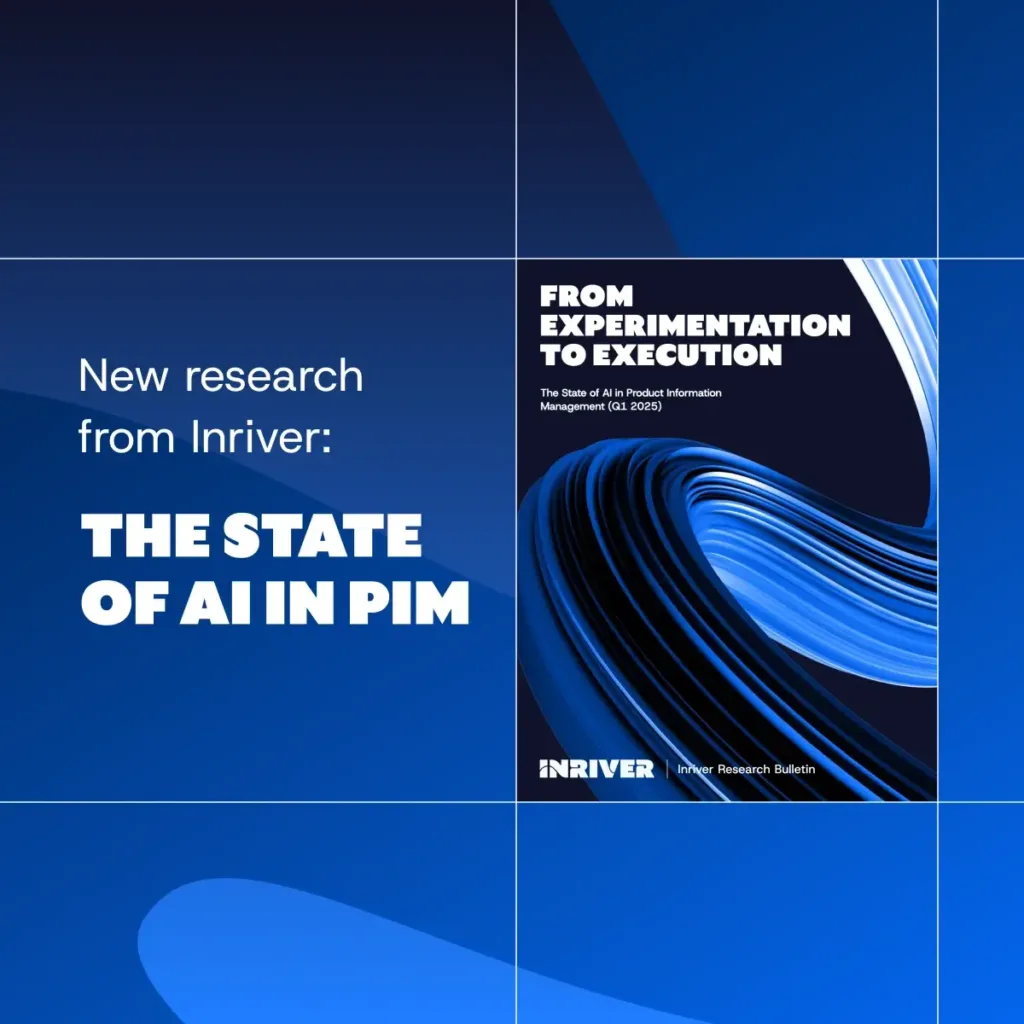
AI is already changing how we manage, enrich, and deliver product information. Is your business ready for 2026 and beyond?
Find out with Inriver’s latest AI in PIM research paper
What to look for in a PIM system for AI integration
For AI to work effectively, your PIM system must be capable of handling structured and accurate product data across all channels. Here are some features to look for when choosing a PIM that will integrate seamlessly with AI:
1. Centralized data repository
Your PIM system must act as a single source of truth, housing all product-related data. This ensures that AI models can pull accurate and consistent data, leading to better content generation and personalization.
➜ Look for: A PIM solution that centralizes data in one place, providing a consistent, structured foundation for AI tools.
2. Real-time data updates
For AI to generate real-time content, your PIM should enable real-time data updates across all platforms. This helps ensure that the AI system always works with the latest product information.
➜ Look for: A PIM system that offers real-time synchronization with AI applications, ensuring continuous, up-to-date data for accurate outputs.
3. Scalability
As your business grows, so does the need for larger product catalogs and the complexity of AI applications. Your PIM must be able to scale with these changes, managing increased product information, languages, and markets.
➜ Look for: A PIM solution that grows with your business needs, able to handle a high volume of product data, multiple languages, and market-specific content.
4. Integration capabilities
Your PIM should integrate smoothly with various AI-powered tools, including machine learning models, computer vision, and NLP. These integrations will help automate processes like content creation, translation, and customer recommendations.
➜ Look for: A PIM with API capabilities for seamless integration with AI platforms and third-party tools like IBM Watson, OpenAI’s ChatGPT, or Google Cloud AI.
5. Flexibility and customization
AI models can be tailored to meet the specific needs of different markets or customer segments. Your PIM system should support customization for these different requirements, making it easier for AI to personalize content and experiences.
➜ Look for: A PIM that allows for easy customization of product attributes, categories, and metadata to meet the specific needs of AI models.
6. User-friendly interface
While AI and PIM can be powerful tools, they must remain accessible to your team. A user-friendly interface is essential for managing AI-driven product information and insights.
➜ Look for: A PIM with an intuitive, easy-to-use interface that enables product managers and marketers to efficiently manage data and extract insights generated by AI.

Put AI-powered PIM to work
Managing product data doesn’t have to be complicated. With Inriver PIM, you get a solid foundation for your product information, plus AI tools that make your job easier—from automating data clean-up to generating better content and catching compliance issues before they become problems.
Curious about what this looks like in practice? Book a demo and see how Inriver’s AI-powered PIM can help you launch faster, work smarter, and deliver the kind of product experiences your customers expect.
See the Inriver PIM in action
Inriver offers the most comprehensive PIM solution on the market, built for speed, scale, and complexity. Let an Inriver expert explain how the Inriver PIM can turn your product data flows into a sustainable revenue stream.
- Get a personalized, guided demo of the Inriver platform
- Have all your PIM questions answered
- Free consultation, zero commitment
Thanks for reaching out!
We’ll be in touch soon.
Please try again in a moment.