How to build a better digital commerce experience
July 3, 2025Shoppers expect more online—meet them with smarter strategies.
As of 2025, 28.3% of U.S. consumers say they prefer shopping online, compared to 45.0% who prefer in-store, with the rest splitting time between both.
Building an exceptional ecommerce experience requires more than just technology—it demands unified product data, strategic personalization, and a deep understanding of how customers interact across every digital commerce experience touchpoint.
Additionally, 81% of shoppers research products online before making a purchase, whether they complete the purchase online or offline.
As more people turn to digital channels, buyer expectations are rising, and the digital commerce landscape has become a true virtual battleground, pushing brands to find competitive edges.
Providing a better customer experience is that competitive differentiator—delivering a truly exceptional one means it must be smooth, simple, and memorable. Building a superior customer experience in ecommerce requires unified product data, personalization, and seamless omnichannel commerce.
Let’s dive deeper into the importance of customer experience and how your organization can create a better one.
The importance of a better customer experience
Imagine losing one of your loyal customers for good—sometimes after a single misstep in their ecommerce experience. According to PwC’s Future of Customer Experience study, 32% of consumers will walk away after just one bad interaction, and nearly 60% will leave following multiple poor experiences.
That’s because when it comes to online shopping, people have choices. And consumers are increasingly loyal to the products and brands that consistently provide exceptional ecommerce experiences with minimum friction. Not only are they more loyal, but they will also spend more.
PwC’s research reveals 86% of buyers are willing to pay more for a great digital commerce experience. And the more expensive the item, the more they are willing to spend.
7 Strategies for building better customer experiences in digital commerce
Consumers currently have more places and ways to shop than ever. Here are some key strategies to build better ecommerce experiences and digital commerce experiences, putting you ahead of the competition:
1. Personalize and optimize product listings for better ecommerce CX
To turn browsers into buyers and create a superior ecommerce experience, you need personalized and optimized product information. High product data quality and rich attributes enable effective personalization in ecommerce. Some best practices to keep in mind include:
- Page speed: create pages that load quickly—preferably in two seconds or less
- Product images: use high-quality photos that display multiple product views
- Product descriptions: beyond title and price, include additional information like add-to-cart, color and size options, and social proof (banners indicating best sellers or low stock items)
- Personalization: leverage intelligent product recommendations to show shoppers similar or complementary products to the ones they are already interested in
2. Cross-sell and upsell with relevant products
When planning an upsell strategy, too many choices can be overwhelming. Instead, offer a few targeted options. Or reduce complexity by creating bundles.
Suggest products that make sense and are relevant to their needs. Use data and customer behaviors to make informed recommendations to solve a pain point. Accurate product relationships and compatibility data from a PIM for ecommerce makes recommendations more relevant.
And remember: the ability to cross-sell doesn’t end once the customer makes their purchase. Use that opportunity to offer additional products and special offers.
3. Create a social commerce strategy within social media platforms
Social media has evolved into a full-fledged commerce channel. In 2025, global social commerce is expected to reach $1.37 trillion, with the U.S. alone projected to hit $107 billion in sales.
And carousels and caption scans—they’re not just browsing. In fact, 82% of consumers use social media for product discovery, and 61% have discovered a new brand within the past year.
Video-native platforms are especially powerful: 70 % of Gen Z discover products on YouTube, while 55 % of TikTok users do the same. Facebook remains the largest social commerce channel, but Instagram’s 70 % usage for product research positions it as a leader in shoppable content.
Start by analyzing where your customers spend time online. Then, tailor goals for each platform—whether it’s community building, live shopping, or shoppable videos.
Integrating social commerce into your overall digital commerce experience strategy ensures customers can discover and purchase products seamlessly across every platform they use.
A diversified social commerce presence lets you reach buyers early in the customer journey and activate sales without relying on your e‑commerce site alone.
4. Enhance the AR shopping experience
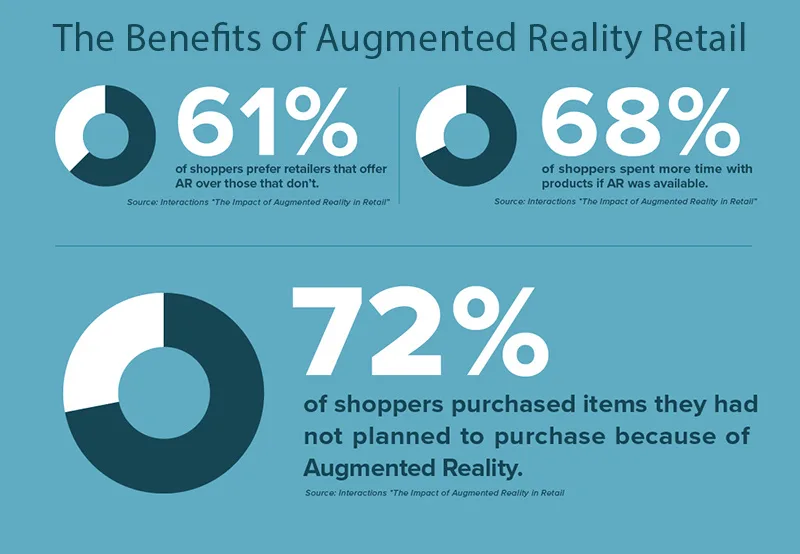
Augmented reality (AR) provides consumers with immersive shopping experiences. Success depends on rich product data: 3D models, accurate dimensions, and visual assets managed centrally.
One option offers a convenient “try before you buy” experience where customers can virtually try on jewelry, make-up, and other products. Preview placement gives customers a glimpse of what a product could look like in their home.
If you’re selling a product with a steep learning curve, an interactive user manual might be a great AR application to help users better understand how your product works.
Or social media filters offer a unique way to showcase a new product. Brands like Gucci, Starbucks, and Adidas have successfully launched custom Instagram filters to promote their brand and generated millions in engagement and revenue.
5. Deliver the highest quality customer service
Visual engagement features—like video chat, co-browsing, screen sharing, and annotations—are becoming essential tools for personalization and trust. Forrester’s recent research shows that 89% of CX leaders plan to invest in visual engagement technologies, expecting up to 56% improvements in customer trust and satisfaction.
By integrating co-browsing or screen-sharing into your digital support channels, you can turn abstract conversations into guided ecommerce experiences that build trust. Agents can illustrate product features, troubleshoot issues in real time, and build deeper emotional connections with shoppers.
When these visual tools are paired with rich product data, the result is a seamless, responsive service experience—one that significantly boosts customer lifetime value and brand loyalty.
6. Orchestrate omnichannel experinces with data
Today’s buyers don’t just shop on a single platform—they bounce between websites, apps, social media, and marketplaces before making a purchase.
To deliver a frictionless experience across every touchpoint, brands must ensure product content is not only accurate but consistent across the board. That’s where centralized product data becomes essential.
With a robust Product Information Management (PIM) system in place, you can create a unified source of truth for product content.
This allows marketing, ecommerce, and merchandising teams to syndicate data confidently to any digital channel—whether it’s a branded ecommerce site, Amazon storefront, printed catalog, or point-of-sale display.
When each product listing reflects the same detailed specs, rich media, and attributes regardless of where it appears, the result is a seamless omnichannel experience.
Customers get a cohesive brand journey no matter how they shop—and you reduce content duplication, minimize channel errors, and accelerate time to market.
Learn more about managing product inventory management on digital channels.
7. Empower AI-powered customer service with better product data
AI assistants and chatbots are playing an increasingly vital role in customer service—handling FAQs, surfacing specs, and guiding purchase decisions in real time. But even the smartest assistant is only as good as the data behind it.
By structuring and enriching your product data through a centralized PIM system, you ensure AI tools have instant access to consistent, up-to-date information. That includes technical specs, compatibility notes, availability status, and usage instructions.
Whether a chatbot is helping customers compare SKUs or answering sizing questions, high-quality product data enables faster, more accurate responses.
This not only improves customer satisfaction but also reduces the burden on support teams. When product information is centralized and easily accessible across digital commerce platforms, AI support channels become more useful, scalable, and trusted.
Get started with Inriver
Today’s buyers expect an excellent buying experience from start to finish. To do that, you’ll need the ability to maximize efficiency and scale to improve conversions. By offering a frictionless path to purchase, you’ll be able to increase sales, reduce product returns, and build better customer experiences—ultimately driving more revenue.
With Inriver’s PIM software, your team can centralize product data, ensure accuracy across every touchpoint, and adapt quickly to shifting customer needs. As your PIM for ecommerce, Inriver enables personalization, omnichannel commerce, and AI-powered customer service at scale.
From enriched product content to seamless channel syndication, Inriver gives you the tools to create commerce experiences that stand out.
Ready to elevate your digital commerce experience? Inriver can help you get there faster.
Published: July 6, 2022
Updated: July 3, 2025
Want to see the Inriver PIM in action?
Schedule a personalized, guided demo with an Inriver expert today to see how the Inriver PIM can get more value from your product information.
Frequently asked questions
An ecommerce transaction refers to the act of buying or selling goods or services online. A digital commerce experience includes the whole journey—product discovery, comparison, checkout, service, and post-purchase engagement.