Why fashion and apparel brands need a PIM solution
November 24, 2025The apparel market is projected to hit $2 trillion by 2029. Will PIM for fashion and apparel give your business the confidence to grow, or leave you playing catch-up?
PIM fashion technology has become essential infrastructure for apparel brands competing in today’s fast-paced, omnichannel retail environment. Fashion moves quickly. One season it’s bold colors on the runway, the next it’s minimalist streetwear flooding your Instagram. At the same time, the choices consumers make are influenced by far more than style. Economic shifts, sustainability concerns, and cultural trends all influence what ends up in their carts.
Fashion brands selling across multiple channels face the same e-commerce data management challenges as other online retailers, but with added complexity from variants, seasonal cycles, and visual merchandising requirements.
Your customers expect you to keep up and deliver the right products, in the right channels, at the right time. To stay competitive, your brand needs more than great designs and fabrics; it needs product data that keeps pace with demand.
However, meeting those expectations is difficult when your product information is stored in different systems, including spreadsheets, marketplaces, e-commerce sites, and in-store catalogs. That fragmentation slows launches, creates errors, and disrupts the seamless experience your customers expect.
A PIM software for fashion solves this. It centralizes your product data, streamlines management, and ensures every channel tells the same story. With Statista projecting the global apparel market to surpass $2 trillion by 2029, how you manage data will determine your share of that growth.
In this article, you’ll see why managing product information is now essential for fashion and apparel companies and how Inriver empowers you to stay ahead.
Why is data management so important for apparel and fashion businesses?
Running your apparel business today means juggling collections in a digital-first world where your customers shop everywhere, follow fast-changing trends, and expect personalization and sustainability. Without control of your data, you risk lost sales, broken trust, and costly returns.
Here’s why strong data management matters for your business:
- E-commerce expectations
Shoppers expect seamless, accurate product details across every online channel. One missing attribute can break trust or push them to your competitor. - Seasonal demands
Collections almost change overnight, and you need product data ready to launch without delays. - Customization and personalization
Accurate attributes make it possible to tailor experiences, from size recommendations to curated looks. - Supply chain efficiency
Consistent data keeps your suppliers, warehouses, and stores aligned, reducing costly mistakes. - Marketplace requirements
Retailers and platforms have strict data templates. Poor-quality content leads to rejections. Using a PIM for e-commerce can ensure compliance at scale. - Marketing impact
Campaigns rely on rich, accurate product content to connect with your buyers. This includes digital assets that elevate your products and strengthen your brand. - Sustainability and ESG
Clear, traceable product data supports reporting and helps your customers make informed choices.
Customer spotlight: Pandora
Pandora is a global leader in the jewelry market, with over 6,500 retail outlets across 100 countries and a growing e-commerce presence that attracts 600 million annual visitors.
Faced with the chaos of internal data management issues that led to confusing product experiences and a disconnect between digital and physical channels, Pandora needed an enterprise-ready PIM solution.

What is the role of PIM in the fashion industry?
Fashion products are complex, with sizes, colors, materials, and collections that change faster than in almost any other sector.
This is precisely why PIM fashion solutions have become mission-critical for apparel brands. Unlike generic product information management systems, PIM fashion platforms are designed to handle the unique complexity of apparel: variant management, seasonal workflows, and multi-channel requirements that define the fashion industry.
Managing this data across teams and channels is where many fashion and apparel businesses lose time, money, and consistency.
A PIM for fashion and apparel solution centralizes everything in one place, so your product data is no longer scattered across spreadsheets, marketplaces, and siloed systems.
Instead, you have a single source of truth where product details can be enriched, updated, and shared across your business.
With PIM, you can:
- Launch collections faster without data bottlenecks.
- Reduce costly errors from inconsistent product details.
- Equip your teams and suppliers with accurate, up-to-date information.
- Deliver consistent, compelling product stories to your customers across every channel.
In an industry where speed, accuracy, and customer trust define success, PIM for apparel and accessories gives you the agility to stay ahead of trends and closer to your shoppers.

Why is PIM so critical for effective data management for apparel and fashion businesses?
Think about the pace of your business. One week you’re preparing a seasonal drop, the next you’re reacting to a micro-trend that went viral on TikTok.
At the same time, your team is managing product data for countless sizes, colors, fabrics, and markets—all while customers expect personalized recommendations and flawless online experiences. It’s no wonder data chaos builds up fast. Modern PIM for e-commerce addresses these challenges by centralizing data, automating syndication, and enabling the speed fashion brands need to capitalize on trending moments.
This is where the right product information management solution changes everything. With the attributes of a fashion PIM built for speed, accuracy, and flexibility, you gain the tools to manage complexity and still deliver experiences your customers love.
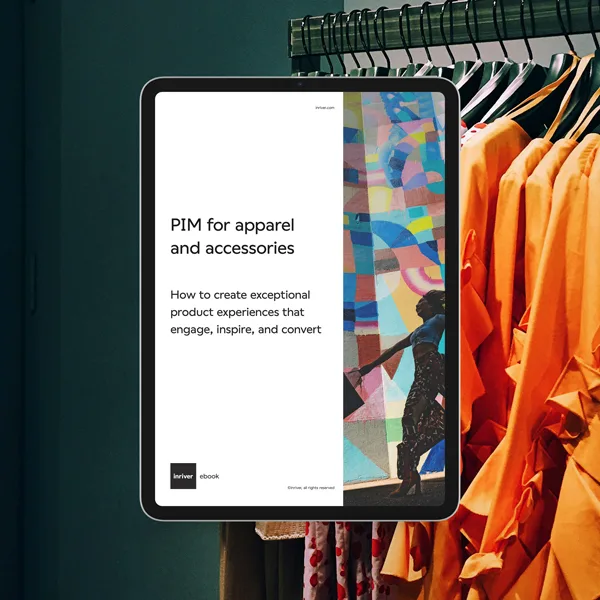
Want to see the full picture? Download the PIM for Fashion and Accessories ebook
to explore how leading brands are transforming their data into a real competitive advantage.

Why is Inriver the best PIM solution for apparel and accessories businesses?
Fashion never sleeps, and neither should your product information management. New collections, new channels, and new customer demands keep raising the bar.
You need a PIM that adapts to you. Inriver PIM is built with flexibility at its core, giving you the power to scale, enrich, and optimize product data as your business grows.
Here’s how Inriver equips apparel and accessories brands to stay ahead:
- Single source of truth
Gain one centralized hub of market-ready product information that grows with your collections and ensures accuracy everywhere.
- AI-powered content enrichment
Turn raw data into compelling, customer-ready product content that elevates your digital shelf.
- API-based syndication
Publish consistent, complete product stories across marketplaces, e-commerce platforms, and partner sites with single-click ease.
- Self-serve digital storefront for brand assets
Give teams and partners instant access to accurate, approved product data and assets—protecting your brand identity.
- Seamless integrations
Connect Inriver with ERP, DAM, MDM, PLM, and other key systems to keep your entire tech stack aligned.
- Digital shelf analytics
Track performance across channels and act quickly with insights that drive better listings and stronger sales.
Inriver helps you manage your product data with confidence and evolves as your business grows, so your brand can seize every opportunity in a $2 trillion market. Learn more in our PIM Buyer’s Guide.
See the Inriver PIM in action
Inriver offers the most comprehensive PIM solution on the market, built for speed, scale, and complexity. Let an Inriver expert explain how the Inriver PIM can turn your product data flows into a sustainable revenue stream.
- Get a personalized, guided demo of the Inriver platform
- Have all your PIM questions answered
- Free consultation, zero commitment
Thanks for reaching out!
We’ll be in touch soon.
Please try again in a moment.